

Greenwich Village


New York City.
“The Village”
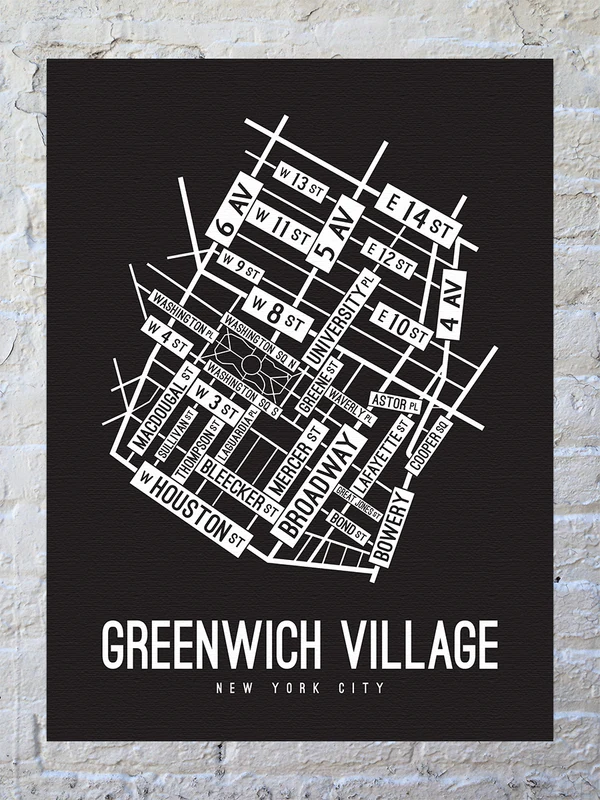
Lat. 40° 43' 42" N | Long. 74° 0' 11" W
THE VILLAGE
Village Alliance
Events Calendar
-
Greenwich Village, often simply called "The Village," is a historic and iconic neighborhood in Lower Manhattan, New York City. Known for its bohemian roots and vibrant cultural history, it’s a beloved area marked by narrow, tree-lined streets, charming brownstones, and an eclectic mix of restaurants, shops, cafes, and live music venues. Here’s a closer look at what makes Greenwich Village special:
1. History and Culture
Originally a rural hamlet in the 17th century, Greenwich Village became part of New York City in the early 19th century.
It grew as a haven for artists, musicians, and writers, especially in the 1950s and 1960s, when it was a center for the Beat and folk music movements.
Notably, the Stonewall Inn on Christopher Street was the site of the Stonewall Riots in 1969, which marked a pivotal moment in the LGBTQ+ rights movement.
2. Architecture
Greenwich Village is known for its beautiful 19th-century townhouses, many of which are now part of the Greenwich Village Historic District.
It has an Old World charm with its smaller buildings, brownstones, and the absence of the city's iconic grid layout, which gives it a more intimate feel than other parts of Manhattan.
Washington Square Park, with its famous arch, is a defining feature of the neighborhood and a social hub for students, musicians, and locals.
3. Notable Locations and Institutions
Washington Square Park: One of the most popular parks in the city, known for its lively atmosphere, chess players, and the impressive Washington Square Arch.
New York University (NYU): The Village is home to NYU's main campus, contributing a youthful, academic energy to the area.
Music and Comedy Venues: The Village is home to famous clubs like The Bitter End, Café Wha?, and the Comedy Cellar, where many legendary artists and comedians launched their careers.
4. Dining and Nightlife
Greenwich Village has an eclectic food scene, offering everything from classic Italian trattorias and historic pizzerias to trendy bistros and artisanal coffee shops.
There are many cozy cafes, jazz clubs, and small venues where live music can be enjoyed nearly every night.
5. Literary and Artistic Legacy
The Village has long been a muse for writers and artists, inspiring works by authors like Jack Kerouac, Allen Ginsberg, and Bob Dylan.
Many of the Beat Generation’s figures gathered here, and it remains a place where artists and writers come for inspiration.
Greenwich Village has retained much of its quirky, independent spirit, making it a treasured enclave within the fast-paced urban environment of New York City. It’s a place where history, art, and community continue to thrive.
-
Greenwich Village has a rich history that has helped shape its unique character. Here's an overview of its evolution:
1. Early Beginnings (1600s–1700s)
Originally inhabited by the Lenape people, the area became farmland for Dutch settlers in the 17th century, who named it "Noortwyck."
Under British rule, the land was known as "Greenwich" and remained largely rural, separate from New York City’s growing urban landscape.
2. Development as a Residential Area (1800s)
During a yellow fever outbreak in the early 19th century, wealthy New Yorkers fled to Greenwich Village for its cleaner air and open spaces.
This led to an influx of affluent residents and the construction of elegant townhouses and row houses, which can still be seen in areas like Washington Square North and along other Village streets.
3. Industrialization and Immigration (Late 1800s–Early 1900s)
By the late 19th century, the Village had transformed into a diverse, working-class neighborhood as industrialization brought factories and new job opportunities.
Many immigrants from Ireland, Italy, and Eastern Europe moved in, giving the area a distinctly multicultural flavor.
In 1916, the bohemian population established the "Greenwich Village Historic District," making it a haven for artists, writers, and intellectuals.
4. The Bohemian Era (Early 20th Century)
In the early 1900s, Greenwich Village became a hub for avant-garde artists, intellectuals, and activists who sought an alternative to mainstream American culture.
The Village was home to many influential figures in art, literature, and social activism, including Edna St. Vincent Millay, Eugene O'Neill, and Marcel Duchamp.
The Little Review and The Masses, radical publications supporting artistic experimentation and leftist politics, were published here, cementing the Village’s role in American modernism.
5. The Beat Generation and Folk Revival (1940s–1960s)
Greenwich Village became a focal point for the Beat Generation, a group of writers and poets who rejected materialism and celebrated personal expression. Jack Kerouac, Allen Ginsberg, and William S. Burroughs frequented the Village’s cafes, bars, and gathering spaces.
In the 1960s, the folk music revival thrived in venues like Café Wha? and The Bitter End, where musicians like Bob Dylan, Joan Baez, and Pete Seeger performed.
Politically, the Village played a key role in the anti-war, civil rights, and feminist movements, reflecting its longstanding tradition of activism.
6. The LGBTQ+ Rights Movement and the Stonewall Riots (1969)
In June 1969, the Stonewall Inn on Christopher Street was the site of a major turning point for LGBTQ+ rights. After a police raid, patrons fought back, sparking the Stonewall Riots, which became a catalyst for the gay rights movement in the U.S.
This event is commemorated every year with Pride celebrations and parades, honoring Greenwich Village's legacy as a birthplace of LGBTQ+ activism.
7. Preservation and Gentrification (1980s–Present)
In the 1960s and '70s, preservationists successfully campaigned to protect the Village’s historic architecture, resulting in the designation of the Greenwich Village Historic District in 1969.
Rising rents in the 1980s and beyond began pushing out artists and longtime residents, changing the Village’s character but also preserving its charm for future generations.
Today, Greenwich Village maintains a balance between preserving its cultural heritage and adapting to modern New York life. It's a mix of trendy boutiques, historic landmarks, and institutions like New York University, which attract students from around the world.
From its early days as a rural retreat to its current status as a vibrant neighborhood, Greenwich Village continues to be celebrated for its cultural impact and historical significance.
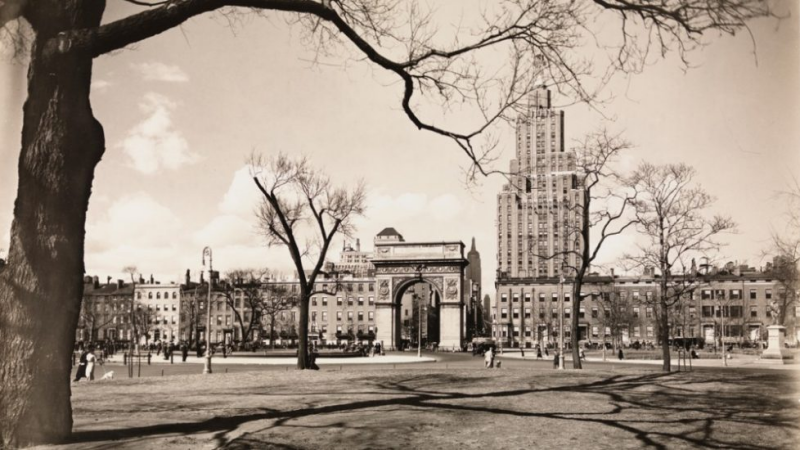
Vintage photo: Washington Square Park, 1936 – Bernice Abbott – From the Museum of the City of New York – WPA Collection
Washington Square Park
In the late 18th and early 19th centuries, the land was used as a potter's field, a burial ground for the poor and those who couldn’t afford private plots. It’s estimated that around 20,000 bodies were buried there, including victims of yellow fever and those who died in poverty.
-
Washington Square Park in New York City's Greenwich Village has a rich and storied history, evolving from farmland to a cultural and social hub.
1. Early History and Use as a Burial Ground (1600s-1820s)
Dutch Farmland: In the 1600s, the area where Washington Square Park is located was farmland owned by Dutch settlers.
Potter's Field: In the late 18th and early 19th centuries, the land was used as a potter's field, a burial ground for the poor and those who couldn’t afford private plots. It’s estimated that around 20,000 bodies were buried here, including victims of yellow fever and those who died in poverty.
2. The Parade Ground and Early Park Development (1820s-1850s)
In 1826, New York City bought the land, which was converted into a military parade ground used for public drills and other military activities. The area was renamed Washington Military Parade Ground.
By the 1830s, the elite began moving into the area, building grand townhouses around the park’s perimeter, solidifying the neighborhood as one of New York’s most desirable locations.
In 1849, the park's now-famous marble arch, designed by Stanford White, was erected in celebration of George Washington's centennial. It originally served as a temporary plaster arch and was later replaced by the more permanent marble structure.
3. Washington Square as a Public Park (1850s-1900s)
By the mid-19th century, Washington Square had officially transitioned to a public park. Its lawns, trees, and pathways were designed to be a green respite amid the growing city.
In the early 20th century, artists, writers, and activists, including the Beat generation writers like Allen Ginsberg and Jack Kerouac, started congregating in Greenwich Village, making the park a central gathering place for intellectuals and artists.
4. Protests and Social Movements (1960s-1980s)
Washington Square Park became known for its activist roots, serving as a focal point for political rallies and demonstrations, from civil rights to anti-war protests.
In the 1960s, activist Jane Jacobs led a successful protest against a plan to build a roadway through the park, which preserved it as a pedestrian space.
5. Renovations and Preservation Efforts (1990s-Present)
The park underwent several renovations to restore its paths, lawns, and historic arch while creating modern amenities and open spaces. A major renovation in the early 2000s faced opposition but ultimately created more cohesive spaces and centered the fountain, restoring its grandeur.
Today, Washington Square Park is a vibrant space known for its cultural events, street performances, and lively community interactions. It remains a gathering place for New Yorkers, students, musicians, and tourists alike.
Washington Square Park’s rich history and cultural significance make it one of New York City's most iconic public spaces.

Step into history! Since 1902, Greenwich Village has been a haven for the creative, rebellious, and Bohemian spirit, with many making this hotel their home. For a truly unique New York experience, they invite you to stay in their historic hotel, right on the park in the heart of The Village, and discover the city like an insider.
THE MUSIC…
Greenwich Village: Music that defined a generation.
-
Greenwich Village, located in Lower Manhattan, has a rich and influential music history that dates back to the early 20th century. Known as a hub for countercultural movements, folk music, and emerging musical genres, it became a breeding ground for artists who shaped American music, particularly during the folk revival of the 1950s and 1960s.
Early Roots and Jazz in the 1920s–1930s
In the 1920s, Greenwich Village was a bohemian enclave where jazz and blues musicians performed in speakeasies and clubs. The Village attracted a diverse group of artists, including writers, painters, and musicians, who found creative freedom in the neighborhood’s welcoming, open-minded atmosphere. Jazz clubs such as Café Society (opened in 1938) were crucial in fostering the careers of African American musicians and were also known for being one of the first racially integrated clubs in the U.S.
The Folk Music Revival of the 1940s–1960s
The folk music revival that began in the 1940s and reached its height in the 1960s was perhaps Greenwich Village’s most iconic musical era. During this time, musicians such as Woody Guthrie, Pete Seeger, and Lead Belly, who had already established folk music as a means of social commentary, became influential figures in the Village. The folk scene took on political undertones, with anti-war, civil rights, and other social issues often at the forefront.
Greenwich Village was home to coffeehouses and music venues like the Café Wha?, The Gaslight Café, and Gerde’s Folk City. In these venues, emerging artists, including Bob Dylan, Joan Baez, and Phil Ochs, honed their skills and crafted the folk music that resonated with the growing counterculture movement. Dylan’s arrival in the Village in 1961 marked a pivotal point; his blend of traditional folk with poetic and socially conscious lyrics turned folk music into a form of protest and self-expression.
Transition to Rock and the 1970s Scene
As folk music began to decline in popularity, many Greenwich Village artists started to blend folk with rock, resulting in a sound that led to folk-rock. This was embodied by artists like Bob Dylan, who famously “went electric” at the Newport Folk Festival in 1965, a move that shocked purists but inspired new musical directions. The Village also became a haven for emerging rock acts and singer-songwriters in the 1970s, including influential artists such as Lou Reed, Joni Mitchell, and Patti Smith, who would later become icons of the alternative and punk scenes.
Punk and New Wave in the Late 1970s–1980s
In the late 1970s and early 1980s, New York’s punk rock and new wave scenes were deeply rooted in nearby neighborhoods, but Greenwich Village was still an influential space. The neighborhood’s clubs, like the famous CBGB (located in the nearby Bowery), hosted groundbreaking acts like the Ramones, Talking Heads, and Blondie. Greenwich Village, with its long-standing countercultural appeal, continued to attract and inspire musicians who defied mainstream trends.
Greenwich Village’s Musical Legacy Today
Today, Greenwich Village’s music legacy is celebrated and remembered for its role in shaping American music and culture. The Village's influence endures in annual events like the Greenwich Village Folk Festival, which keep the spirit of folk and protest music alive. Though the neighborhood has undergone significant gentrification and many iconic venues have closed, its musical history remains a vital part of its character, with landmarks and remaining venues offering a glimpse into its storied past.
In essence, Greenwich Village became a landmark of musical and social evolution, helping launch the careers of some of the most influential figures in American music and becoming synonymous with artistic freedom, social activism, and the spirit of independence that defined each of its musical eras.
Greenwich Village wasn't always the upscale neighborhood filled with celebrity condos and boutiques. Rooted in 1960s counterculture, it was once a vibrant hub for artists, musicians, writers, and creatives like Bob Dylan, Allen Ginsberg, Annie Leibovitz, and Joan Baez. Walking tours often showcase historic landmarks and the former haunts of these iconic figures, offering visitors a deeper connection to the area's rich artistic history that might be missed when exploring on their own.
The Irish premiere exhibition of Ted Russell's intimate, previously unseen photographs offers a rare glimpse into the life of a young Bob Dylan in New York City. These images capture moments backstage and onstage at folk clubs, in his apartment with girlfriend Suze Rotolo, at his writing desk, and on the bustling streets of Greenwich Village. They provide a fresh and candid perspective on the life of the 20-year-old folk icon, offering a window into the vibrant world of 1960s New York.
In the summers of 2010, 2011, and 2012, American artist Carlotta Hester spent time in County Cavan, creating over 150 drawings that beautifully capture traditional Irish musicians, singers, and dancers in their most creative moments. For this exhibition, Hester has curated a selection of 24 drawings, showcasing the spirit and energy of Fleadh Cheoil na hÉireann, the largest traditional Irish music festival, through her exquisite artistic vision.
Photographs @ Ted Russell/Govinda Gallery.
The Corkscrew Journal: Allen Ginsberg & The Beats
Slow Walk It.
Village Shopping Guide
Pottery classes have been a cornerstone of Greenwich House since nearly its inception, starting as part of a broader handicraft program in 1904. The Pottery officially became a department within Greenwich House in 1909. Over the years, the Pottery’s classrooms have been shaped by the work of esteemed teachers, students, and residents, including renowned artists such as Peter Voulkos, Rirkrit Tiravanija, Betty Woodman, Ghada Amer, Ann Agee, Kathy Butterly, Simone Leigh, and David Salle.

BOOKS
AMERICAN ART
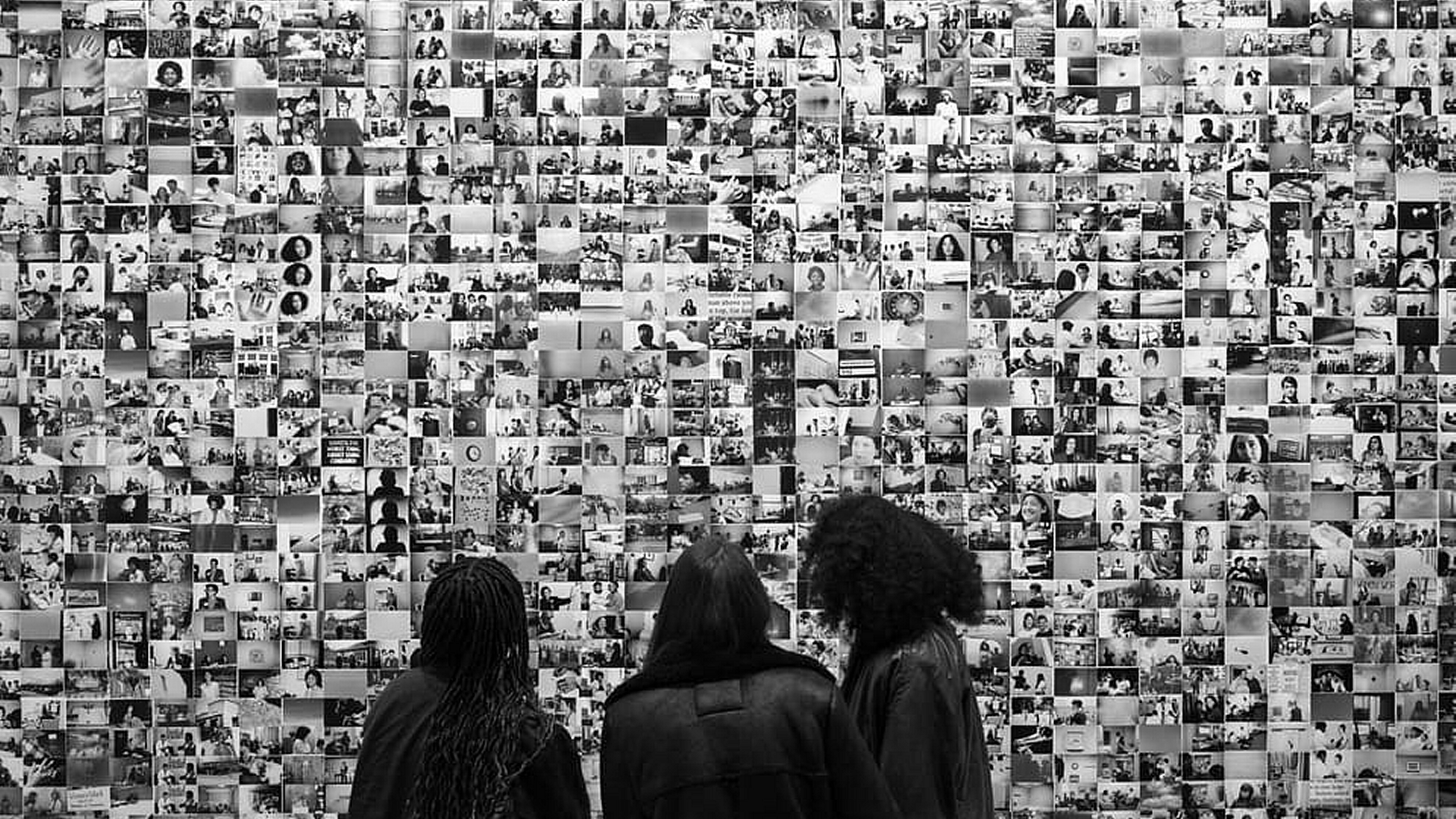
The Whitney Museum invites you to explore the vibrant Meatpacking District, a dynamic twenty-block neighborhood home to artists, galleries, educators, entrepreneurs, and residents. Located just steps from the High Line and a short walk from Greenwich Village. The museum offers a unique cultural experience in the heart of New York City.
THE WHITNEY
The Whitney is the only museum solely dedicated to American art and artists. Founded in 1932 by Gertrude Vanderbilt Whitney, the museum took a pioneering stance in supporting American artists who were often overlooked. Today, its collection showcases works by more than 3,900 artists, including icons like Edward Hopper, Georgia O’Keeffe, Jean-Michel Basquiat, Alexander Calder, and Faith Ringgold. The Whitney’s signature exhibition, the Whitney Biennial, remains the longest-running survey of American art, where artists challenge conventions, ignite discussions, and influence culture.

Edward Hopper
Edward Hopper, Early Sunday Morning, 1930. Oil on canvas, 35 3/16 × 60 1/4 in. (89.4 × 153 cm). Whitney Museum of American Art, New York; purchased with funds from Gertrude Vanderbilt Whitney 31.426. © Heirs of Josephine N. Hopper/Licensed by VAGA, New York, NY
Edward Hopper’s New York
Oct 19, 2022–Mar 5, 2023
The exhibition is over, but you can still get the context and the village vibe… Good read and vids.
Edward Hopper called New York home for nearly six decades (1908–67), a period that encompassed his entire mature career. However, his New York was not a literal depiction of the rapidly changing metropolis. While the city experienced tremendous growth—skyscrapers soared, construction boomed, and its population became more diverse—Hopper’s paintings focused on quieter, human-scale scenes, often devoid of people. Rather than portraying the iconic skyline or famous landmarks like the Brooklyn Bridge or the Empire State Building, he focused on overlooked structures and hidden corners, drawn to the contrasts between old and new, public and private, residential and civic. Edward Hopper’s New York explores the artist’s deep connection to the city, presenting a vision of New York that reflects both Hopper’s inner world and the ever-evolving urban landscape around him. READ MORE.